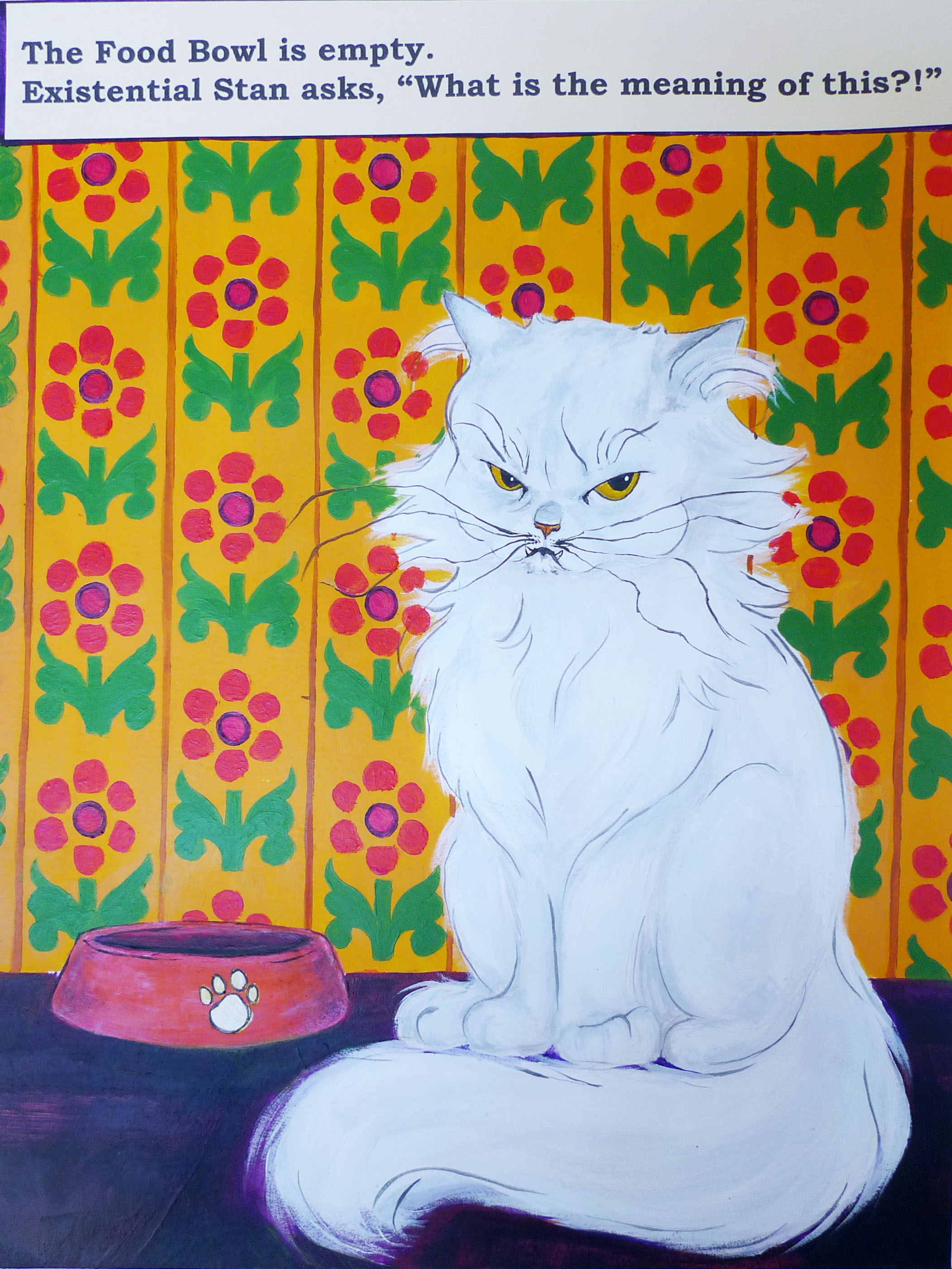
Apologies for the length of time between this post and the last. This entire blog is an experiment, so I wanted to start by writing out some thoughts, and then waiting awhile to go back and see if they were actually any good! After gaining some objectivity from the perspective of time, so far my writing is passable (aside from a few typos), and this experiemnt worth pursuing.
Which brings me to the topic of this post: Obessive Self-Examination, or ‘obsessive introspection.’ Socrates said, “the unexamined life is not worth living.” I am beginning to think I take this to a whole new level.
I have always enjoyed reading about psychology, sociology, and philosophy as a way to research why people do things, how we create meaning for ourselves, and my own role in this crazy Universe we live in. As an artist, having an informed reason for every idea I want to convey, and every decision I make in order to express that idea, is what guides my hand; as an introvert, turning all that research energy inwards is natural to a person whose world begins from the Self. Understanding why I felt or reacted a certain way to an experience or person, for example, is the first step in learning how to improve my encounter next time, or continue building that relationship. It’s a personal growth process.
But sometimes “Knowing Thyself” becomes an obstacle to living a healthy life. When you’re constantly analyzing every action, thought, or conversation because somehow by understanding everything about yourself, and perfecting all the changes you need to make within yourself to get the optimum results, it will amount to an ultimate answer that will satisfy your constant yearning for closure–that’s not the good soul-searching that comes from someone at an important crossroads in their life. It’s insecurity and anxiety.
It sounds kind of obvious when I write it out, but it’s not obvious when it’s a part of your daily life. I want to say it’s a good problem to have, because it’s one way to acknowledge responsibility for yourself. But it can also be a fast-track to depression and immobility, when you’re always searching for ways to change, instead of either accepting yourself or taking action. Maybe it goes back to graduating from college, and I just haven’t mentally left that crossroads. Or maybe it’s a symptom of an identity-crisis in my generation, where passion and high expectations are clashing with reality and we’re looking at ourselves, asking, “why?”
Maybe I should just make art about it.